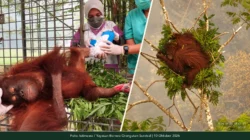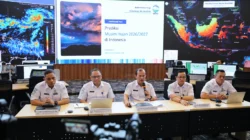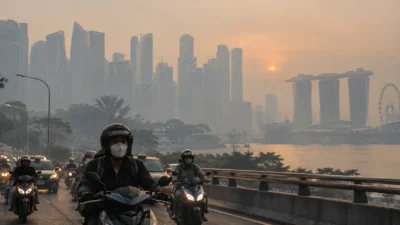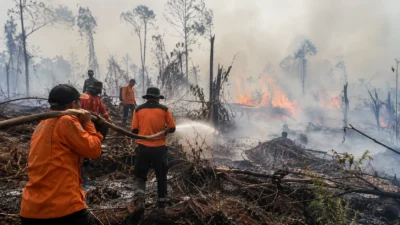


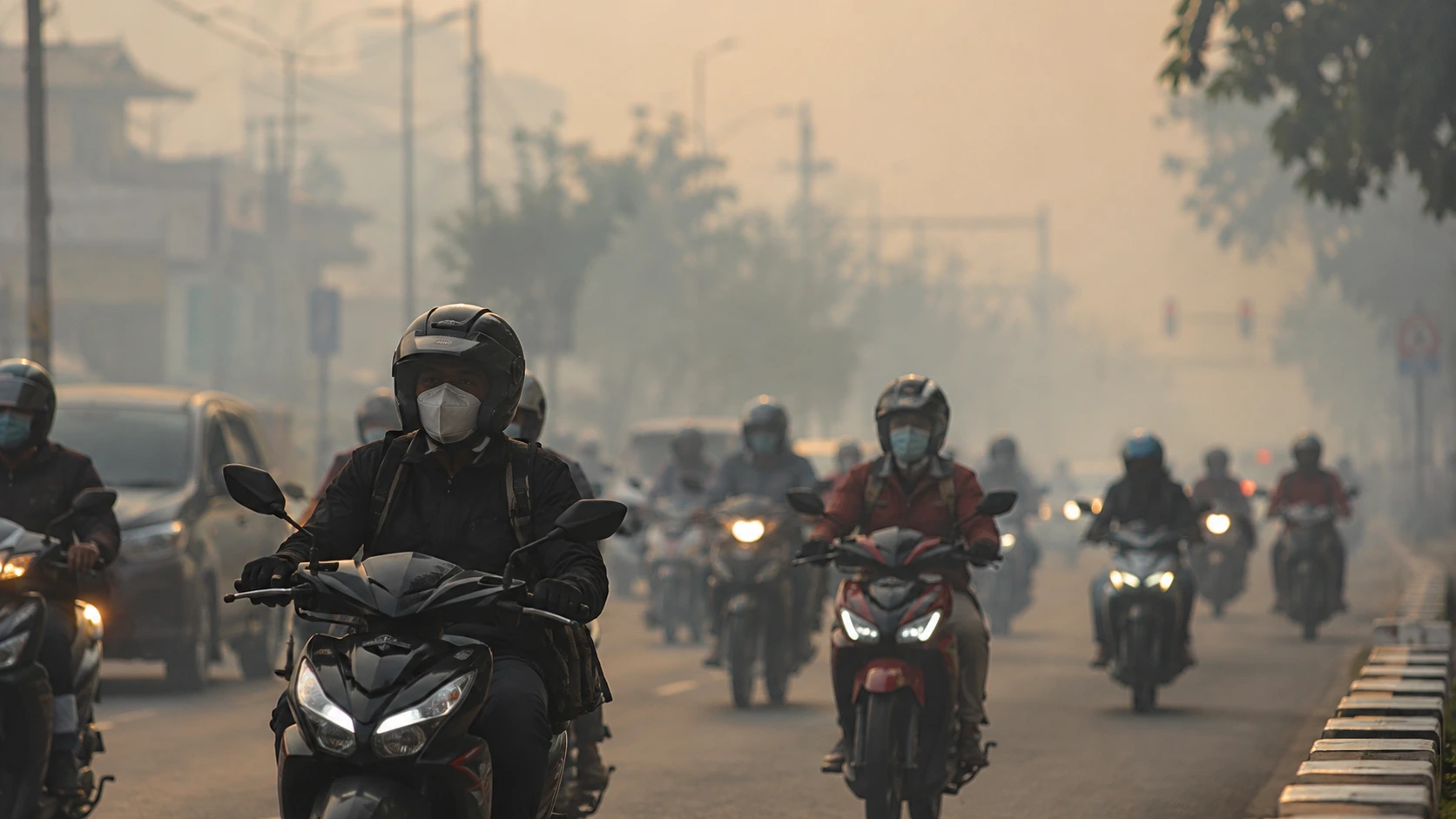
- Four Months of Emergency Response, Fires Continue
- Jekan Raya Accounts for Most Fire Incidents
- Hazardous Air Pollution Raises Public Health Concerns
- Respiratory Cases Rise, Total Affected Population Remains Unknown
- Smoke Forces Schools to Adopt Remote Learning
- Emergency Funding Increases, Effectiveness Faces Scrutiny
- Emergency Extended as Wildfire Threat Persists
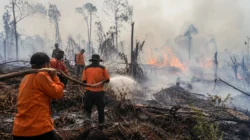
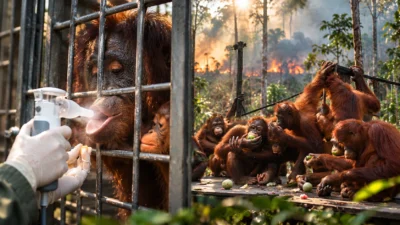
The Palangka Raya Regional Disaster Management Agency (BPBD) recorded 832 forest and land fire incidents between June 1 and October 8, 2026. The total burned area reached 1,407.75 hectares.
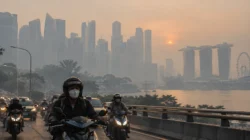
The consequences extend beyond environmental damage. Smoke pollution has disrupted public health, education, and daily activities while increasing the financial burden of emergency response operations.
The Health Office reported 10,240 cases of acute respiratory infections (ARI) between June and early October. Meanwhile, an air quality measurement on September 30 recorded an Indonesian Air Pollution Standard Index (ISPU) reading of 1,199, classified as hazardous.
Sources: Palangka Raya BPBD, Health Office, and Ministry of Environment. Figures refer to different reporting periods.
Four Months of Emergency Response, Fires Continue
BPBD began recording incidents following the declaration of wildfire emergency preparedness on June 1, 2026. By October 8, the monitoring period had lasted 130 days.
However, this does not mean a single fire burned continuously for 130 days. Emergency teams faced repeated outbreaks across multiple locations.
The 832 recorded incidents demonstrate the scale of firefighting and monitoring requirements. Authorities must identify recurring hotspots to strengthen prevention rather than relying exclusively on emergency response.
Jekan Raya Accounts for Most Fire Incidents
BPBD data shows that fires were heavily concentrated in Jekan Raya District. The district recorded 502 incidents, representing approximately 60.3 percent of the city’s total.
Sebangau ranked second with 173 incidents. Three other districts also experienced fires, although at lower frequencies.
Click each district to explore its incident count and percentage.
Jekan Raya — 502 incidents
60.34% of all 832 incidents.
Sebangau — 173 incidents
20.79% of all incidents.
Bukit Batu — 78 incidents
9.38% of all incidents.
Pahandut — 74 incidents
8.89% of all incidents.
Rakumpit — 5 incidents
0.60% of all incidents.
Source: Palangka Raya BPBD.
Jekan Raya and Sebangau together accounted for more than 81 percent of recorded incidents. This concentration highlights the need to assess patrol coverage, water availability, and land-clearing practices.
However, incident frequency does not directly indicate the largest burned area. Authorities should release district-level burned-area data to provide a more complete assessment of environmental damage.
Hazardous Air Pollution Raises Public Health Concerns
Smoke has carried the consequences of land fires into communities far from the flames. Residents face increased exposure to air pollution during routine outdoor activities.
Data from Indonesia’s Ministry of Environment and Environmental Control Agency recorded an ISPU reading of 1,199 in Jekan Raya on Wednesday, September 30, 2026, at 1:08 p.m. local time.
The principal pollutant was PM2.5, fine particulate matter capable of penetrating deep into the respiratory system.
The reading exceeded the hazardous threshold of 300. However, it represents a measurement at a specific time rather than the average air quality throughout the four-month period.
Indonesian Air Pollution Standard Index (ISPU)
Moderate
Unhealthy
Hazardous
View ISPU classification thresholds
| 1–50 | Good |
| 51–100 | Moderate |
| 101–200 | Unhealthy |
| 201–300 | Very unhealthy |
| Above 300 | Hazardous |
Source: Ministry of Environment data reported by detikHealth.
High concentrations of PM2.5 can aggravate respiratory problems and increase health risks, particularly among children, older adults, and people with existing respiratory conditions.
Respiratory Cases Rise, Total Affected Population Remains Unknown
The Palangka Raya Health Office reported 10,240 acute respiratory infection cases between June and early October 2026. The figure illustrates the burden on healthcare services during the smoke pollution period.
Palangka Raya Health Office Head Riduan discussed the figures in Palangka Raya on Wednesday, October 7, 2026.
“In September, the Health Office recorded 2,900 cases. By early October, another 190 acute respiratory infection cases had been reported. The total reached 10,240 cases,” Riduan said.
The monthly figures included 1,849 cases in June, 2,293 in July, and 3,104 in August. September recorded 2,900 cases, while early October accounted for 190 cases.
However, these monthly figures add up to 10,336 cases, which is 96 more than the announced total of 10,240. The discrepancy still requires clarification from the Health Office.
Monthly reported cases, June–early October 2026
Source: Statement by Palangka Raya Health Office Head, October 7, 2026.
The number of respiratory infection cases should not be treated as the total number of people affected by wildfires. A patient may appear in the records more than once, and not every infection can be directly attributed to smoke exposure.
As of this report, no verified figure was available for the number of unique residents directly or indirectly affected. Authorities need to distinguish between patients, smoke-exposed residents, and people whose daily activities have been disrupted.
Smoke Forces Schools to Adopt Remote Learning
Deteriorating air quality also disrupted education. The Palangka Raya Education Office extended remote learning for early childhood education centers, elementary schools, and junior high schools from October 5 to 7, 2026.
Acting Palangka Raya Education Office Head Jayani explained the decision in Palangka Raya on Monday, October 5, 2026.
“We have observed that air quality has not improved significantly and remains in the hazardous category.”
Jayani added that student safety remained a central consideration in each evaluation. Schools were expected to maintain learning activities through remote instruction.
The policy demonstrates how wildfire smoke affects communities beyond the burned areas. However, the number of affected students and lost classroom hours still requires further assessment.
Emergency Funding Increases, Effectiveness Faces Scrutiny
Months of firefighting operations require substantial funding. Authorities must cover fuel, food supplies, personnel, transportation, and firefighting equipment.
The Palangka Raya administration allocated an additional Rp4.8 billion through the revised 2026 regional budget. This included Rp2.8 billion for BPBD spending and Rp2 billion for unexpected emergency expenditures.
Palangka Raya BPBD Chief Hendrikus Satriya Budi discussed the funding increase in Palangka Raya in late September 2026.
“For wildfire response and other disaster management needs, the mayor and the Regional Legislative Council increased funding through the revised regional budget. Around Rp2.8 billion was allocated to BPBD, with another Rp2 billion added to the emergency fund.”
The administration had previously spent approximately Rp2.25 billion from emergency funds in three stages. The new allocation should not be confused with money already disbursed or spent.
Previously spent funds versus additional budget allocations
View the Rp4.8 billion allocation breakdown
BPBD expenditure: Rp2.8 billion.
Additional emergency funds: Rp2 billion.
The allocation covers wildfire response and other disaster management needs.
Source: Palangka Raya BPBD
The scale of funding requires transparent expenditure reporting. Residents need access to information on operational costs, firefighting results, and environmental recovery requirements.
Emergency Extended as Wildfire Threat Persists
The Palangka Raya administration extended its wildfire emergency response status until November 9, 2026. The decision aims to maintain operational readiness, emergency posts, personnel, and funding.
Palangka Raya Mayor Fairid Naparin emphasized the protection of residential neighborhoods in a statement in Palangka Raya on Friday, October 9, 2026.
“Fire locations close to residential areas are being prioritized to prevent flames from spreading and endangering people’s homes.”
Fairid added that residents also play an important role in prevention. People should avoid burning land for clearing and immediately report signs of fire.
Residents can report emergencies through the 112 service or Palangka Raya BPBD. Early reports help firefighters reach affected locations before flames spread.
After more than four months of emergency operations, the administration faces challenges beyond extinguishing fires. Prevention, public health protection, and environmental recovery must advance together.
The 832 recorded incidents provide a basis for evaluating surveillance in high-risk areas. Authorities must also update financial and health impact reports so the public can assess the progress of emergency management.
Editorial note: All charts display historical figures for the dates specified, not real-time monitoring. Respiratory infection cases are not equivalent to the number of unique residents affected. Quotations are English translations of previously published Indonesian statements.