

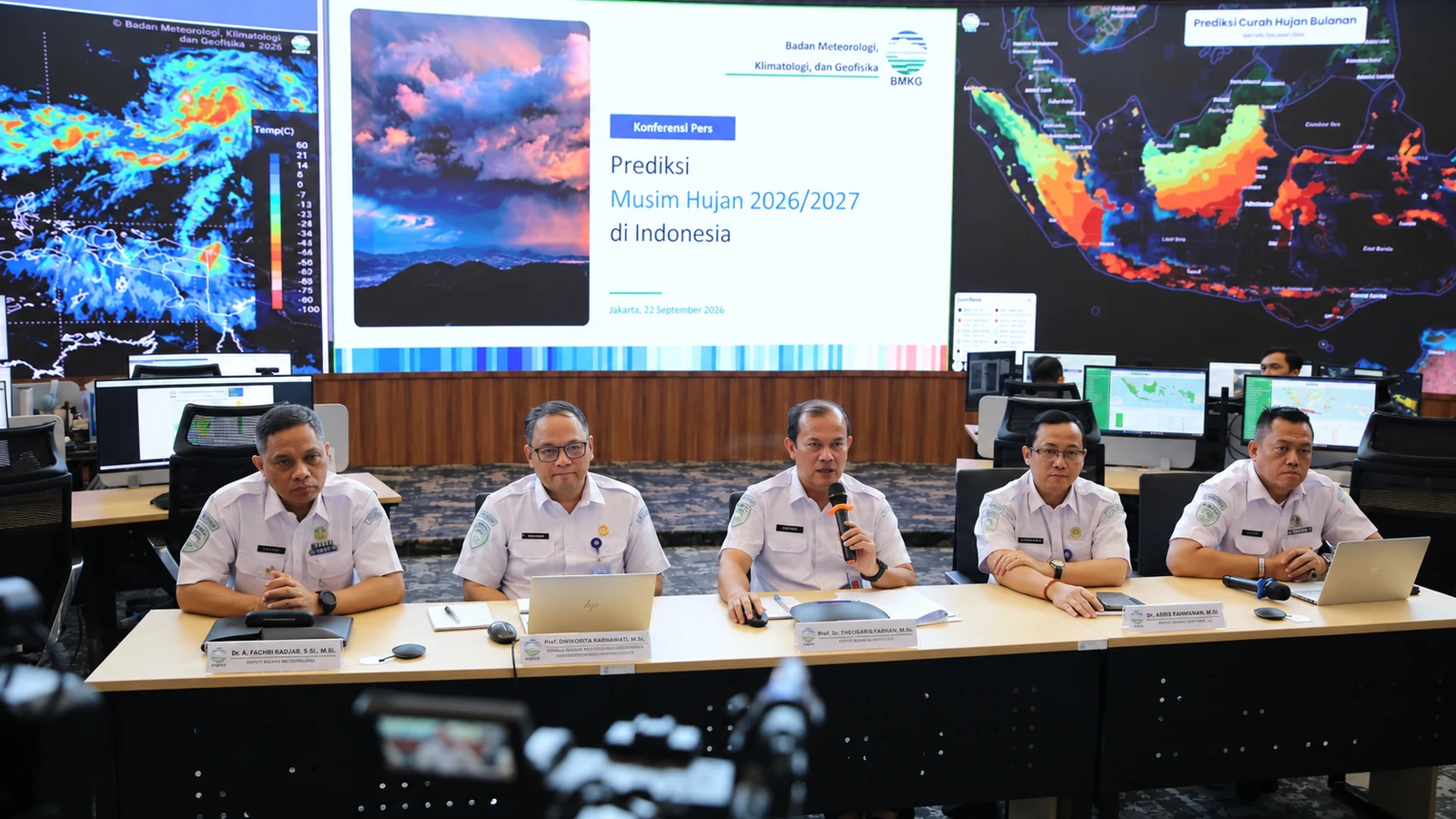
Konferensi pers prakiraan musim hujan 2026/2027, 22 September 2026. Foto: BMKG; penyesuaian komposisi dengan AI. Foto konteks informasi iklim.
JAKARTA, folitimes.id – Indonesia faces a delayed rainy season in 529 climate zones, covering about 61.08 percent of its land area, according to BMKG. A very strong El Niño is influencing atmospheric conditions.
El Niño Changes Seasonal Patterns
In addition, BMKG presented its forecast on September 22 and updated its atmospheric analysis in early October.
Some Regions Await Rain Until November
Meanwhile, BMKG expects the rainy season to begin in 185 climate zones in November and 266 in December. The onset varies by region.
Furthermore, regional governments need to use forecasts relevant to their own locations.
Drought Has Not Ended
In addition, early October monitoring shows that El Niño remains strong. This increases the need to monitor wildfires and water reserves.
Meanwhile, drought does not mean that conditions are identical throughout Indonesia.
Central Kalimantan Needs Vigilance
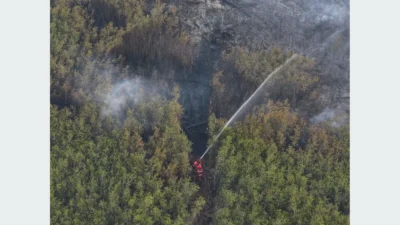
Furthermore, several areas of Central Kalimantan are covered by meteorological drought warnings. Wildfire risks require patrols and prevention.
Drought is not the only cause of fires, because human activity also affects the risk.
Farming and Water Supplies Face Risks
A delayed rainy season can disrupt planting calendars and water availability. However, actual impacts on crop yields require separate data.
In addition, authorities need to monitor irrigation and household water needs.
Rainfall Characteristics Vary
BMKG forecasts normal rainfall in 510 climate zones, above-normal rainfall in 147 and below-normal rainfall in 42. Seasonal onset and rainfall characteristics are different indicators.
Climate forecasts must be interpreted according to their definitions.
Reference: Official government information.