

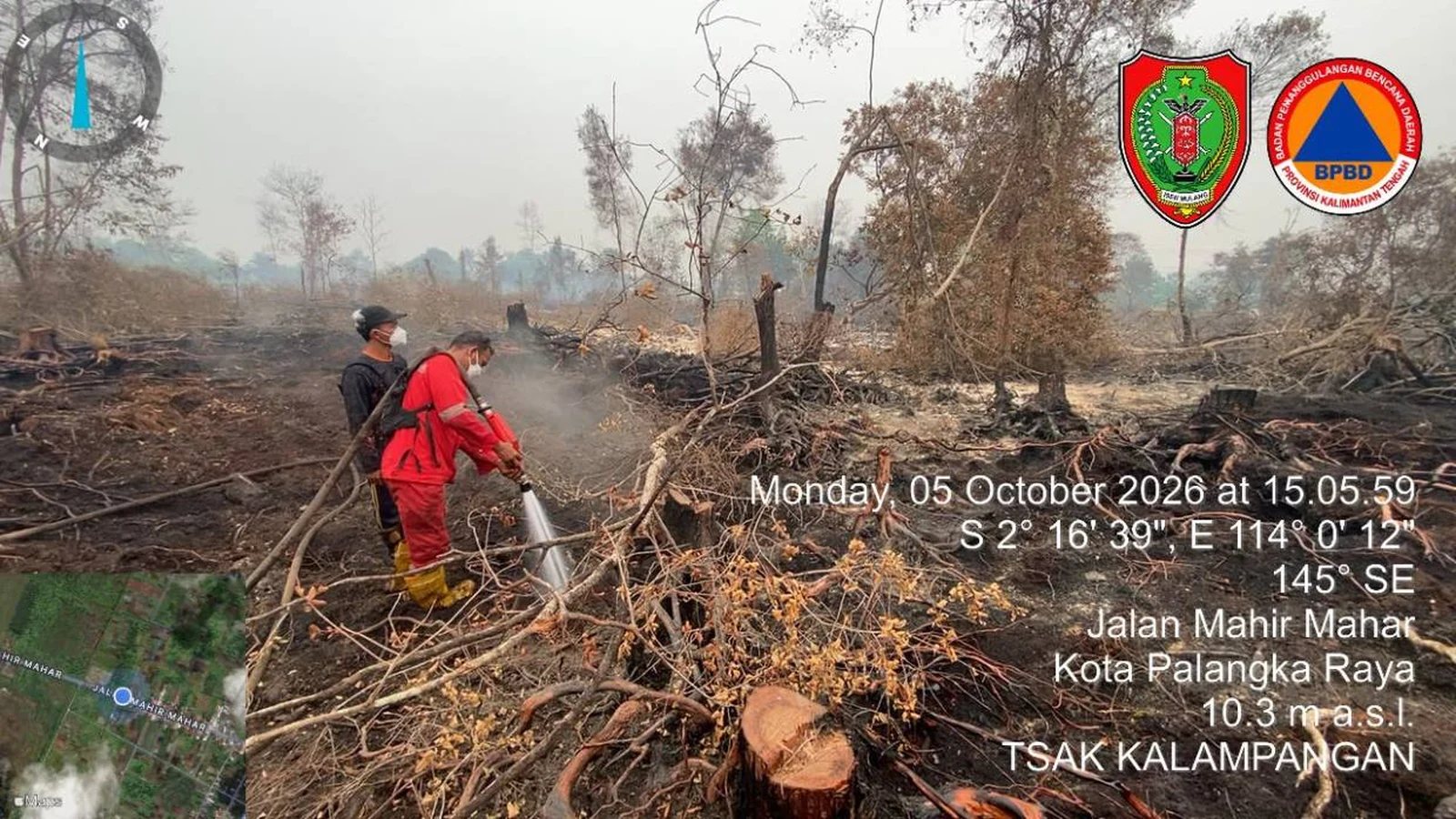
Documentation: BPBPK Central Kalimantan/MMC, October 5, 2026.
PALANGKA RAYA, folitimes.id – A nationwide decline in hotspots has brought little relief to Central Kalimantan. While high-confidence hotspots across Indonesia decreased, the province moved in the opposite direction and recorded the highest count among six priority provinces for forest and land fire control.
The Ministry of Forestry recorded 116 high-confidence hotspots in Central Kalimantan as of Sunday, October 4, 2026, at 9:10 p.m. Western Indonesian Time. The figure rose from 96 a day earlier.
Central Kalimantan Hotspots Rise as National Figures Fall
Nationwide, the SiPongi early warning system for forest and land fire control detected 527 high-confidence hotspots, down by 139 from 666 the previous day.
Central Kalimantan instead added 20 hotspots in one day, the highest count among the six priority provinces.
The Ministry of Forestry stresses that hotspot counts do not equal the number of fires. Satellite data identify surface temperature anomalies that still require verification on the ground.
Some 10,700 Personnel Support Operations
Pressure on the ground prompted a substantial response. Central Kalimantan’s disaster and fire management agency, BPBPK, recorded 10,700 personnel supporting ground firefighting operations on Monday, October 5, 2026.
They came from the military, police, regional disaster management agencies, Manggala Agni, regional government agencies, community fire prevention groups and company teams.
Within 24 hours, crews handled forest and land fires covering 137.18 hectares. The data came from district and city reports submitted through BPBPK’s emergency operations centre.
Surface Fuels Remain Highly Flammable
The threat extends beyond hotspot numbers. BMKG’s Fine Fuel Moisture Code analysis placed Central Kalimantan in a category where fires can start very easily.
This indicates that surface fuels have dried out. Fires can start and spread when an ignition source is present.
PM2.5 Readings Have Exceeded 1,000
The effects of forest and land fires also reach the air that residents breathe.
The Central Kalimantan provincial government reported that PM2.5 concentrations in several affected areas had exceeded 300. At certain times, readings rose above 1,000.
The impact is therefore broader than firefighting alone. Authorities must address health, transport and community activities simultaneously.
Authorities Strengthen Field Operations
BPBPK says teams continue patrols, firefighting, cooling operations and monitoring in vulnerable areas.
Authorities also ask residents to stop open burning because dry vegetation increases the likelihood of fires spreading.
The Challenge Continues
Rising hotspot numbers while the national figure falls are a warning for Central Kalimantan. Rain in some areas can help firefighting, but highly flammable land conditions mean the risk persists.
The 116 hotspots also show that the large operation involving 10,700 personnel continues to face substantial pressure on the ground.
Reference: Related report and statements.