

BOS Reveals Wildfire Threat as Dozens of Orangutans Receive Treatment
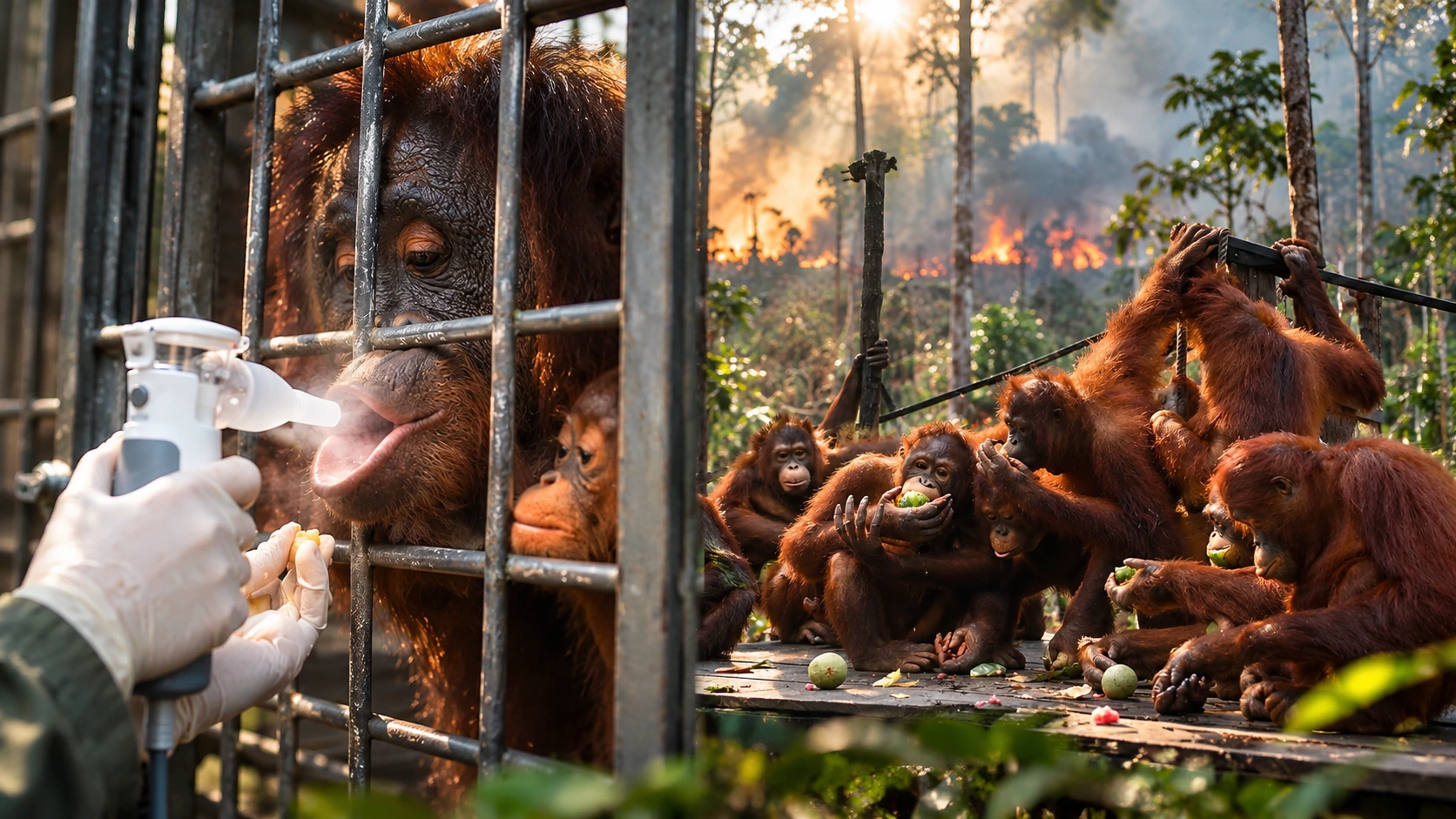
PALANGKA RAYA, folitimes.id – Forest and land fires in Central Kalimantan are threatening orangutan health. BOS Foundation reports that 46 orangutans at the Nyaru Menteng Rehabilitation Centre have developed respiratory symptoms consistent with acute respiratory infections (ARI).
- Dozens of Orangutans Show Respiratory Symptoms
- Novita Survives in a Fire-Affected Forest
- Novita’s Burn Injuries Require Intensive Treatment
- Forest School Continues Despite Smoke Threats
- Falling River Levels Create Another Threat
- BOS Firefighting Teams Strengthen Wildfire Prevention
- Habitat Protection Requires More Than Emergency Rescue
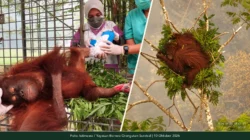
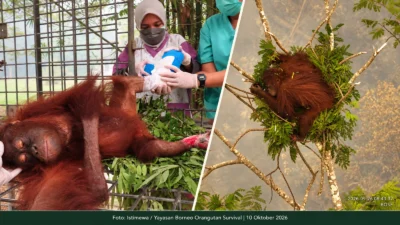
Meanwhile, veterinary teams continue treating Novita, a young female orangutan suffering from burn injuries. A joint rescue team evacuated the animal, estimated to be three to four years old, from a fire-affected area in Katune, Banturung Subdistrict, Bukit Batu District, Palangka Raya, on September 26, 2026.
These two situations reveal different threats facing protected wildlife. Flames can cause direct injuries, while smoke increases the risk of respiratory health problems.
Dozens of Orangutans Show Respiratory Symptoms
BOS Foundation documents report that 46 orangutans have experienced coughing, sneezing, and nasal discharge. Veterinarians and animal welfare personnel continue monitoring their condition.
BOS Foundation emphasizes that respiratory symptoms alone cannot establish the cause of an illness. Medical examinations remain necessary before determining whether the symptoms are directly linked to smoke exposure.
These findings are significant because wildfires can threaten wildlife even when flames do not reach rehabilitation facilities. Air quality remains a critical factor requiring continuous monitoring.
In a separate development, BOS Nyaru Menteng Foundation Veterinary Coordinator Dr. Agus Fahroni reported that 47 orangutans had been identified with acute respiratory infections. His statement was reported from Palangka Raya on Friday, October 9, 2026.
“Approximately 47 orangutans have indeed been identified with acute respiratory infections. However, their conditions remain relatively mild and can still be managed by our medical team,” Agus said.
The difference between the 46 cases recorded in the document and the 47 cases mentioned in his statement requires confirmation of the reporting dates. The newsroom cannot yet determine whether the discrepancy reflects additional cases or different recording periods.
Novita Survives in a Fire-Affected Forest
The wildfire threat is also evident in Novita’s rescue. The team located the young orangutan on September 25, 2026, while she was sheltering in a sengon tree.
The Katune area was experiencing forest and land fires at the time. Difficult terrain and active flames prolonged the rescue operation over two days.
The Central Kalimantan Natural Resources Conservation Agency (BKSDA), BOS Foundation, the Indonesian Army, and local residents worked together during the operation. The team eventually brought Novita out of the dangerous area on September 26.
An initial medical examination revealed burns on both palms and both soles of her feet. Rescuers suspected that Novita had crossed burning ground or vegetation before climbing the tree.
This explanation remains an initial assessment. The document does not state that rescuers directly witnessed how the injuries occurred.
Novita’s Burn Injuries Require Intensive Treatment
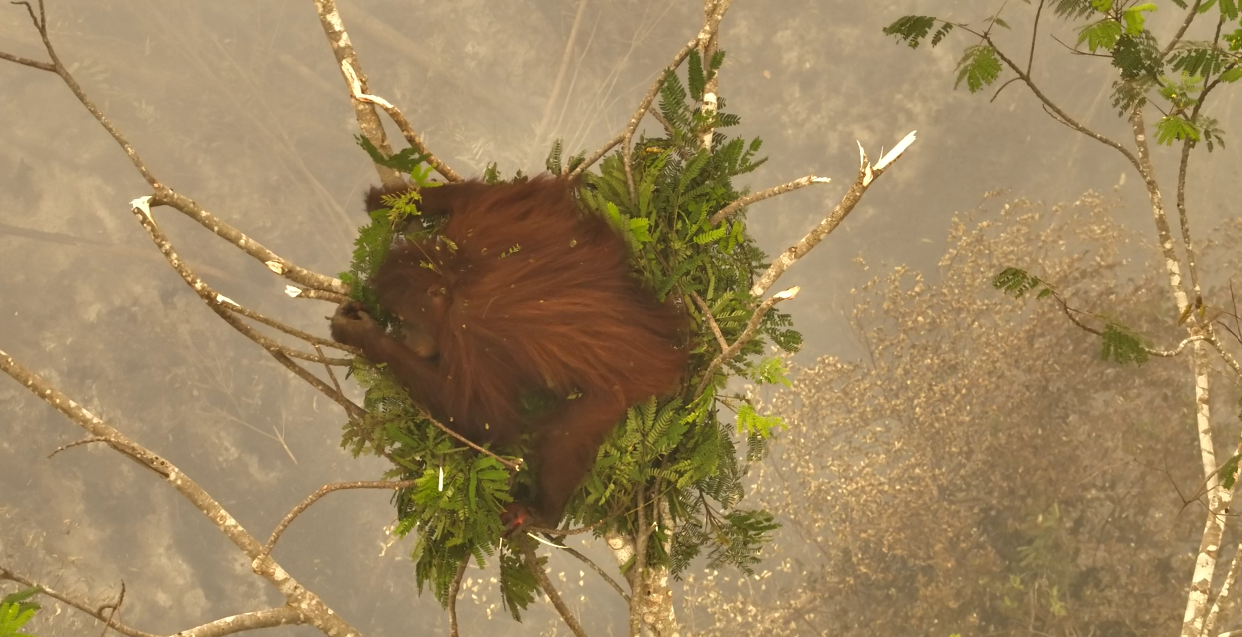
Photo: Novita, an orangutan trapped in a wildfire-affected area. Photo courtesy of BOS Foundation.
After evacuating Novita, rescuers immediately administered oxygen and intravenous fluids. The team then transported her to the Nyaru Menteng Orangutan Rehabilitation Centre.
The document received by the newsroom emphasizes that medical recovery remains the immediate priority. Veterinary teams continue monitoring Novita’s health and adjusting treatment according to her medical needs.
The latest update published by BOS Foundation on Saturday, October 10, 2026, provides further details. The organization reports that burns affected approximately 20 percent of Novita’s body.
BOS Foundation also explains that tissue damage to her feet required further medical intervention. On October 2, veterinarians amputated damaged portions of four of Novita’s toes.
This information comes from an official update published after the initial medical assessment. Veterinary teams continue monitoring her wounds, blood test results, response to treatment, and infection risks.
Forest School Continues Despite Smoke Threats
BOS Foundation reports that rehabilitation activities at Nyaru Menteng remain operational. Forest School activities continue for up to seven hours, depending on environmental conditions.
However, staff will reassess the duration if air quality deteriorates. Orangutan health and welfare remain the primary considerations.
According to the document, BOS Foundation currently cares for 225 orangutans at Nyaru Menteng. Meanwhile, Samboja Lestari in East Kalimantan provides care for another 110 individuals.
The two facilities care for a combined total of 335 orangutans. These figures highlight the substantial need for health monitoring and emergency preparedness throughout the wildfire season.
Falling River Levels Create Another Threat
The prolonged dry season is also affecting orangutan pre-release islands. Declining river levels can weaken the waterways’ function as natural barriers.
Under normal conditions, rivers help prevent orangutans from leaving pre-release islands. When water levels fall, some individuals may be able to move beyond those boundaries.
BOS Foundation reports that several orangutans have been evacuated and returned to Nyaru Menteng. However, the document received by the newsroom does not specify the exact number involved.
An earlier official BOS Foundation report in September stated that 11 orangutans had returned to the rehabilitation centre because of these conditions. That figure relates to an earlier reporting period and may not reflect the latest situation.
These developments demonstrate that dry-season threats extend beyond flames. Changes in river levels can also affect the management and security of rehabilitation areas.
BOS Firefighting Teams Strengthen Wildfire Prevention
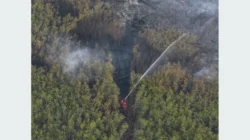
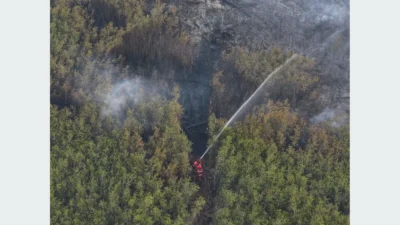
BOS Foundation has intensified hotspot monitoring through satellite information and field observations. Its teams also conduct patrols in fire-prone areas.
Personnel inspect firebreaks, conservation boundaries, water sources, and firefighting infrastructure. They prepare equipment and deploy personnel according to the level of risk at each location.
In Central Kalimantan, BOS Foundation’s Fire Task Force also supports firefighting operations around Palangka Raya. Its assistance extends to locations more than 10 kilometres from Nyaru Menteng.
The team works alongside the Central Kalimantan Natural Resources Conservation Agency, the provincial Forestry Agency, and local communities. These efforts aim to reduce threats to conservation areas and surrounding ecosystems.
However, the document does not provide the number of deployed personnel, operational budget requirements, or the total patrol area. Such information is necessary to assess whether available resources are sufficient to confront prolonged wildfires.
Habitat Protection Requires More Than Emergency Rescue
Novita’s case demonstrates that evacuation is only the first step in treating wildlife affected by forest and land fires. Following rescue operations, conservation teams still face lengthy medical treatment and rehabilitation processes.
Meanwhile, dozens of orangutans showing respiratory symptoms require continued monitoring. Health risks can arise even when flames do not directly reach rehabilitation facilities.
BOS Foundation identifies wildfire prevention, early detection, air-quality monitoring, and habitat protection as priorities. These measures are essential to reducing threats before fires spread into conservation areas.
The next challenge is ensuring that emergency preparedness remains effective throughout an extended dry season. Water availability, firefighting personnel, and veterinary facilities are critical components of that effort.
For Novita, no decision has yet been made regarding her release into the wild. Veterinary teams remain focused on wound recovery and her overall health.
Forest and land fires in Central Kalimantan demonstrate how environmental destruction can leave lasting consequences for wildlife. Preventing fires and protecting natural habitats remain fundamental to reducing the risk of similar incidents in the future.