

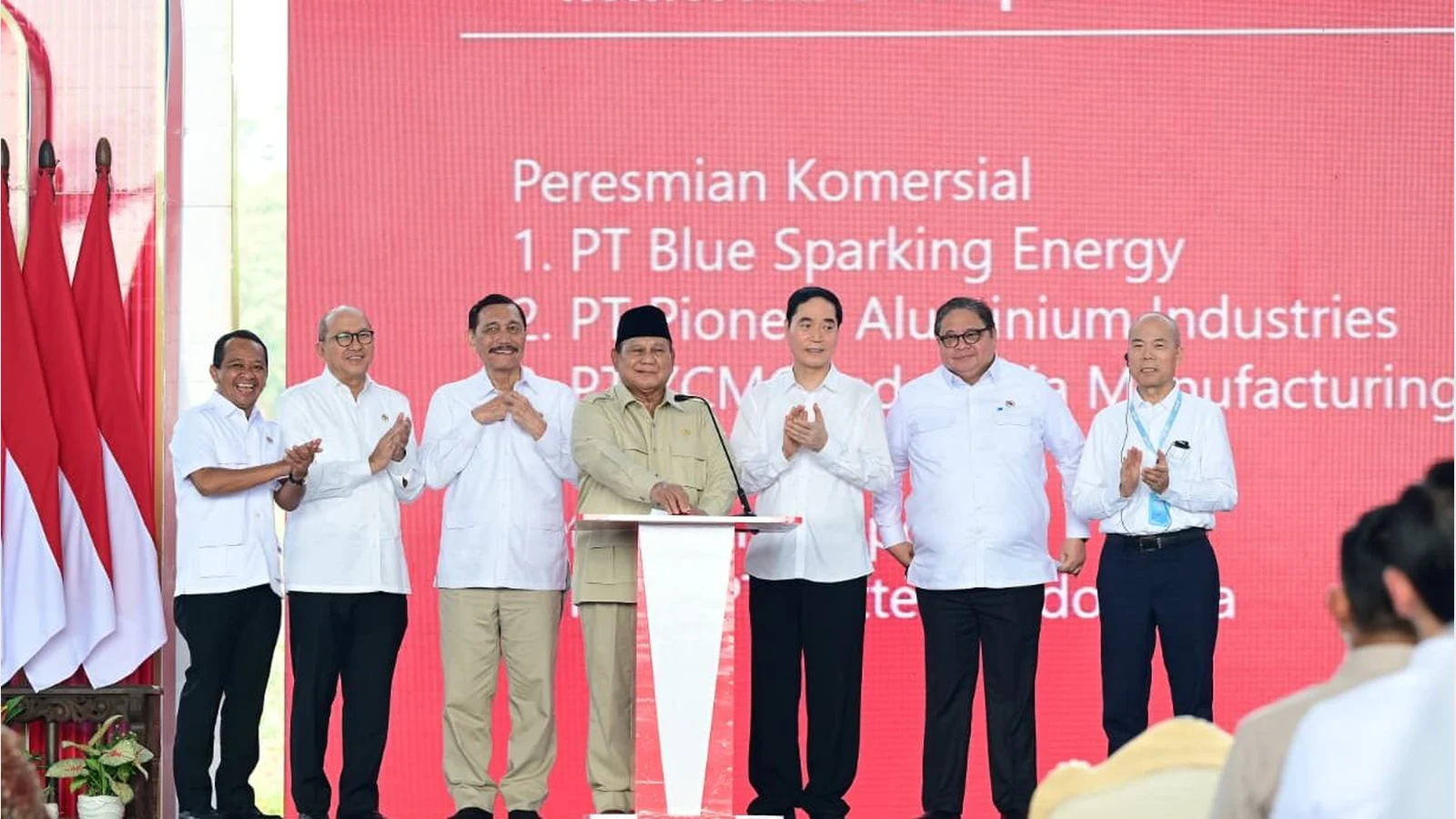
Launch of downstream projects at IWIP, October 8, 2026. Photo: Presidential Secretariat Press Bureau/Muchlis Jr.
CENTRAL HALMAHERA, folitimes.id – President Prabowo Subianto launched 11 industrial downstream projects at Indonesia Weda Bay Industrial Park (IWIP), Central Halmahera, North Maluku, on Thursday (October 8, 2026). The government announced total investment of US$10.2 billion, or approximately Rp180 trillion.
However, the projects have not all reached the same operating stage. Four have entered commercial operations, while the other seven are beginning construction.
Four Projects Operating, Seven Begin Construction
The government divided the industrial launch into two groups according to their implementation stage.
Four projects have entered commercial operations. Seven others are at the initial construction or groundbreaking stage.
This distinction matters when interpreting the Rp180 trillion investment figure.
The announced investment does not automatically mean that all funds have been spent or that every facility is producing goods.
Investment delivery needs to be assessed through construction progress, facility operations and investment reports.
Prabowo Inaugurates First Battery Exports
Alongside the project launch, the government initiated the first electric vehicle battery exports from IWIP.
The activity forms part of the development of nickel-based industries.
President Prabowo Subianto described the activities in his address at IWIP, Central Halmahera, on Thursday (October 8, 2026).
“Today we will launch the first exports of electric vehicle batteries,” Prabowo said.
The president also explained that the launch covered four commercial industrial projects and seven projects entering construction.
The first exports are an important milestone. Nevertheless, sustained production capacity and subsequent export values still need to be measured through trade data.
Industrial Chains Built from Raw Materials
During his visit, the president inspected industrial facilities forming part of the downstream ecosystem.
The facilities include nickel processing, battery raw material production and aluminium industries.
This industrial chain indicates the government's policy direction of expanding domestic mineral processing.
However, developing an industrial chain does not depend solely on building factories. Energy supply, logistics, technology and workforce needs also affect operational sustainability.
Investment Delivery Requires Oversight
The government announced total investment of US$10.2 billion.
The figure indicates the projects' scale, but does not separately explain the investment delivered at each facility.
The public needs information about construction schedules for the seven new projects, operating targets and investment progress.
Such data are important for distinguishing investment commitments from funds that actually arrive and are used.
Without that distinction, a large investment figure risks creating the impression that every project is already delivering economic benefits at launch.
Employment Benefits Need Measurement
Downstream industrial development has the potential to create jobs in manufacturing, construction, logistics and supporting services.
However, those benefits need to be demonstrated through the number of workers actually employed.
The government and industrial park operator also need to explain the share of local workers, skills requirements and training programmes.
The availability of quality jobs is one measure of whether industrial investment directly benefits surrounding communities.
Environmental Impacts Must Receive Attention
Expanding mineral-based industries requires strict environmental management.
Energy needs, water use, waste management and transport activities are important parts of industrial operations.
A project launch alone is insufficient to assess all environmental impacts. Assessment requires environmental approval documents, monitoring reports and relevant oversight data.
These aspects need to be addressed alongside the measurement of economic benefits.
Downstream Development Tested by Concrete Results
The launch of 11 projects marks an expansion of Central Halmahera's industrial ecosystem.
However, the success of downstream development does not depend solely on the size of announced investment.
Construction delivery, sustained exports, employment and environmental compliance are indicators that need to be disclosed publicly.
The four operating projects can provide a starting point for measurement. Meanwhile, the seven new projects require oversight until they genuinely enter production.
Reference: Official government statement.