

- Argentina Held the Ball, Spain Controlled the Space
- Yamal Sent an Early Warning
- Spain Cut Messi Off from the Attack
- Spain’s Dominance Produced No First-Half Goal
- Scaloni’s Concerns Became Reality
- Substitutions Changed Spain’s Attacking Character
- Martínez Held Back Spain’s Attacking Waves
- Enzo’s Red Card Shifted the Balance
- Spain Had a Goal Disallowed
- Ferran Torres Ended the Deadlock
- Statistics Exposed the Match Imbalance
- Argentina Took Risks Only After Falling Behind
- A Narrow Scoreline Concealed a Major Imbalance
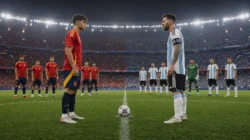
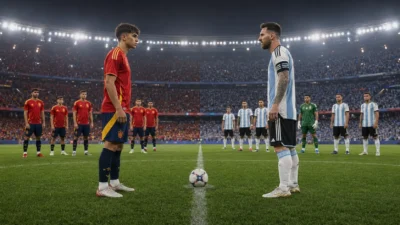
JAKARTA, folitimes.id – Spain won the 2026 FIFA World Cup after defeating Argentina 1–0 on Sunday, July 19, 2026, United States time. The final took place at New York New Jersey Stadium in East Rutherford.
The match ended early Monday, July 20, 2026, Western Indonesian Time. Ferran Torres broke the deadlock in the 106th minute after both teams failed to score during regulation time.
The final score suggested a narrow contest. However, the match statistics exposed a far greater imbalance.
Argentina Held the Ball, Spain Controlled the Space
Argentina started the match by trying to control possession. Lionel Scaloni wanted his players to avoid Spain’s aggressive pressure.
However, that early possession produced no penetration. Argentina circulated the ball mostly inside its defensive and midfield areas.
Spain gradually seized control of the tempo. Rodri became the distribution hub, while Fabián Ruiz opened attacking routes from the left.
Dani Olmo occupied the space behind Argentina’s midfielders. His position forced Enzo Fernández to choose between marking Olmo and pressing Rodri.
Both choices created problems. Olmo found space whenever Enzo approached Rodri. Rodri dictated play whenever Enzo held his position.
Argentina assigned Rodrigo De Paul to support Gonzalo Montiel. Nicolás González also dropped deeper to help Nicolás Tagliafico.
The move strengthened Argentina’s defense on both wings. However, it cut off support for Lionel Messi and Julián Álvarez.
Yamal Sent an Early Warning
Spain created the first dangerous chance in the fifth minute. Lamine Yamal moved inside from the right and directed the ball toward the center.
The rebound reached Dani Olmo. The midfielder returned it into Yamal’s path.
Yamal’s shot struck an Argentine player and changed direction. Emiliano Martínez had already moved, but he adjusted his footing and stopped the ball.
The save protected Argentina’s initial plan. An early Spanish goal would have forced Scaloni to open his defensive structure much sooner.
Argentina briefly responded through a direct attack. Julián Álvarez sent the ball behind Spain’s defensive line.
Unai Simón rushed far outside his goal to beat Messi to the ball. It returned to Álvarez, but the striker failed to control it.
The moment revealed the risk behind Spain’s strategy. A high defensive line always leaves space for the opponent.
Argentina could not exploit that opening consistently. Spain’s pressure stopped the first pass before the ball could reach Messi.
Spain Cut Messi Off from the Attack
Spain did not assign one player to mark Messi. Instead, they severed the passing routes toward the Argentine captain.
Rodri protected the central area. Pau Cubarsí and Aymeric Laporte stepped forward whenever Álvarez dropped deep to receive the ball.
By the 15th minute, Messi had registered only a few touches. He had to move nearly 45 meters away from goal to receive passes.
That position reduced his influence. Messi could still identify space, but he lacked options ahead of him.
Argentina created a potential opening in the 17th minute. De Paul delivered a low free kick behind Spain’s defense.
Nicolás González anticipated the delivery and timed his run well. However, he failed to reach the ball.
The move should have offered Argentina a tactical clue. The space behind Pedro Porro provided a possible attacking route.
However, De Paul spent most of his time helping Montiel contain Yamal. Argentina consequently lost the player expected to carry the ball forward.
Spain’s Dominance Produced No First-Half Goal
Spain controlled the territory as the first half progressed. Argentina formed a compact block in front of its penalty area.
Cristian Romero and Lisandro Martínez guarded Mikel Oyarzabal. Neither defender allowed the Spanish striker to draw them too far from position.
Tagliafico blocked Yamal’s path toward the center. González helped protect the left side of Argentina’s defense.
That structure contained Spain. However, Argentina paid a high price because it almost completely lost its counterattacking routes.
Spain also encountered problems with its finishing. Oyarzabal frequently dropped deeper to support passing combinations.
His movement opened space for Olmo and Yamal. However, Spain lacked a striker inside the box when crosses arrived.
The first half ended goalless. The 0–0 score reflected Argentina’s resistance more than an evenly balanced contest.
Scaloni’s Concerns Became Reality
Before the match, Argentina Head Coach Lionel Scaloni had acknowledged the scale of Spain’s threat.
“As soon as Spain left the hotel, I was already worried. When they were on the bus and leaving the hotel, I was worried. They are a great team. Everything about Spain worries me.”
Lionel Scaloni — Head Coach of the Argentina National Team
The match later justified that concern. Spain did not merely control possession. They also determined where the game unfolded.
Argentina defended too deeply. The distance between its midfielders, Messi, and Álvarez continued to widen.
Whenever Argentina recovered the ball, Spanish players immediately surrounded the carrier. Argentina never had enough time to construct an attack.
Substitutions Changed Spain’s Attacking Character
Luis de la Fuente refused to let Spain repeat the same pattern. The Spain head coach changed his attacking structure through his substitutions.
Nico Williams entered to maintain width on the left. Mikel Merino added aerial strength and late runs from midfield.
Ferran Torres offered more vertical movement. Pedri accelerated Spain’s progressive passing through the middle.
Those changes prevented Argentina from focusing only on short passing routes. Spain began combining crosses, second balls, and rapid switches of play.
| Minute | Player In | Player Out | Tactical Impact |
|---|---|---|---|
| 62′ | Ferran Torres | Mikel Oyarzabal | Added vertical runs behind the defenders |
| 62′ | Pedri | Fabián Ruiz | Accelerated progressive passing |
| 75′ | Nico Williams | Álex Baena | Maintained width and attacked from the left |
| 75′ | Mikel Merino | Dani Olmo | Added aerial strength and late midfield runs |
Martínez Held Back Spain’s Attacking Waves
Emiliano Martínez became Argentina’s most decisive player. He repeatedly denied Spain’s attempts.
The Argentina goalkeeper stopped Nico Williams near the end of regulation time. He also pushed away Yamal’s free kick in the 98th minute.
Martínez’s saves carried Argentina toward extra time. However, Spain’s pressure continued to drain the players’ energy and concentration.
Spain remained in control. Argentina focused on protecting its defensive depth and waiting for a penalty shootout.
Enzo’s Red Card Shifted the Balance
Enzo Fernández received his second yellow card in the 93rd minute. He challenged Pau Cubarsí after the ball returned toward midfield.
The foul did not stop an immediate scoring chance. Enzo reacted late to the ball’s direction and made an unnecessary decision.
Referee Slavko Vinčić sent him off. Argentina had to play extra time with ten men.
The red card exposed the effects of sustained pressure. Argentina’s midfielders had spent regulation time shifting, chasing, and closing spaces.
Spain Had a Goal Disallowed
Spain nearly scored in the 96th minute. Nico Williams reacted to a loose ball and sent it into the net.
However, the referee disallowed the goal. He judged that Mikel Merino had fouled Nicolás Otamendi during the attack.
Spain threatened again in the 103rd minute. Williams crossed from the left toward Merino.
Merino arrived from deep and directed his header narrowly wide. The movement revealed the growing gaps inside Argentina’s defense.
Ferran Torres Ended the Deadlock
Spain needed only about 37 seconds after the second period of extra time began. Pedro Porro found space on the right.
Porro crossed toward the far post. Nico Williams won the duel and headed the ball back into the middle.
Ferran Torres arrived without sufficient defensive attention. He struck the ball with his left foot toward the upper part of the goal.
Martínez could not stop it. Spain took a 1–0 lead in the 106th minute.
The goal exposed the collapse of Argentina’s structure. Every defender focused on the ball and Williams.
No player tracked Torres. He arrived from behind and punished a one-second delay.
Statistics Exposed the Match Imbalance
Argentina Took Risks Only After Falling Behind
Argentina became more aggressive after conceding. Messi moved higher and directed attacks through set pieces.
In the 117th minute, Messi attempted a shot from about 25 meters. The ball struck Merino and failed to threaten Unai Simón.
In the 120th minute, Messi played a short free kick. Giuliano Simeone then delivered a low cross.
Cubarsí anticipated the danger and intercepted the ball at the near post. His clearance stopped Argentina from creating an equalizer.
Argentina produced its best opportunity in the 122nd minute. Messi’s corner caused a loose ball inside the penalty area.
Simeone met it while losing his balance. His effort went over the crossbar.
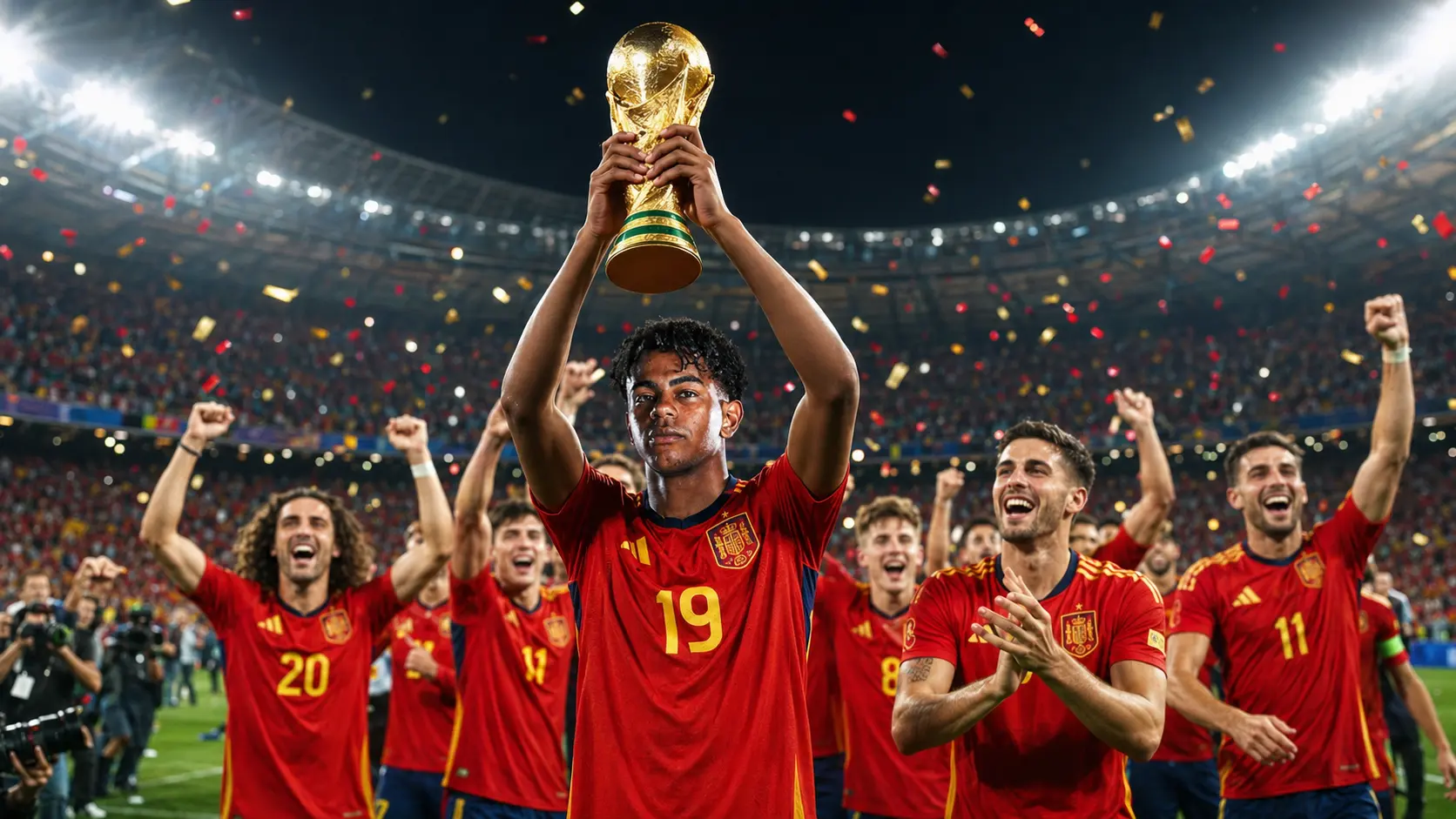
The referee then ended the match. Spain lifted its second World Cup trophy after winning its first title in 2010.
A Narrow Scoreline Concealed a Major Imbalance
The 1–0 score did not tell the full story. Spain dominated territory, chance creation, squad depth, and tempo management.
Argentina defended with considerable courage. However, they relied too heavily on Martínez and the possibility of a penalty shootout.
Messi lost access to the ball. Álvarez became isolated, while Argentina’s midfield exhausted its energy through defensive work.
De la Fuente won the tactical battle through his substitutions. Nico Williams, Merino, Pedri, and Torres changed the direction of the match.
Spain did not force a single method. They combined short passes, width, crosses, and late runs from midfield.
Argentina resisted the pressure for more than 100 minutes. However, defending without a counterattacking threat always carries serious risk.
Torres’ goal finally exposed the reality hidden by the scoreline. Spain did not merely win the match. They controlled nearly every stage of the final.