

- Ten Goals Could Not Save France
- From Bondy to the Global Stage
- His Output Increased at Every Tournament
- Speed Is Not His Only Weapon
- France’s Dependence Became Obvious
- Midfield Lost Control
- Defensive Failures Erased the Attack’s Work
- The End of Didier Deschamps’ Era
- Fontaine’s Single-Tournament Record Still Stands
- The Golden Boot Carried a Warning
- Mbappé Leads the All-Time World Cup Scoring Record
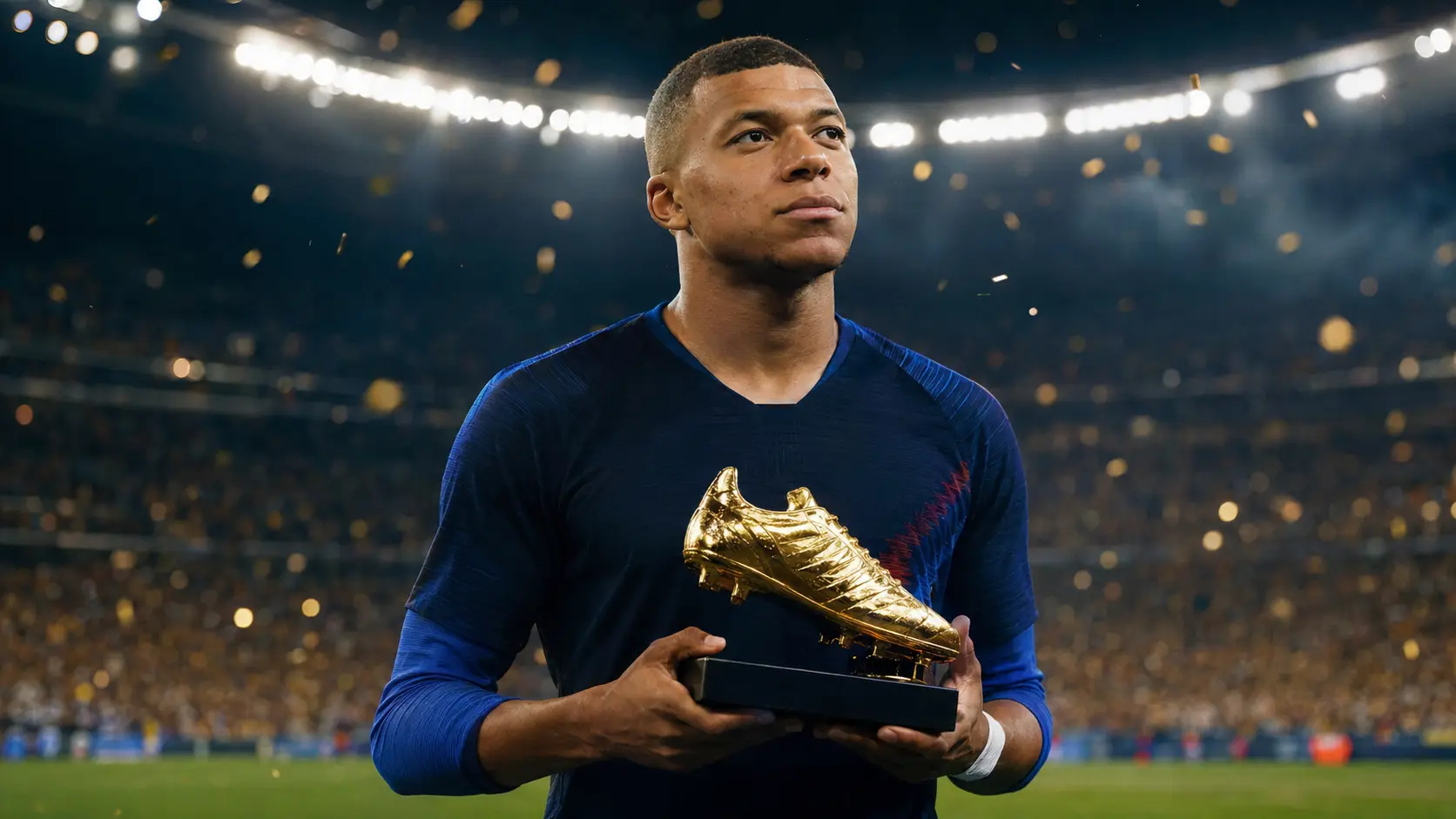
JAKARTA, folitimes.id – Kylian Mbappé ended the 2026 FIFA World Cup with two sharply contrasting outcomes. He claimed the Golden Boot, but France returned home without a medal.
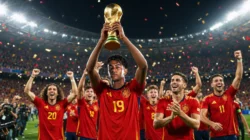
The France captain scored twice against England on Saturday, July 18, 2026. Those goals raised his tournament total to 10.
England still won the third-place playoff 6–4. The result left Les Bleus in fourth place.
The match nevertheless created football history. Mbappé now has 22 goals across three World Cup editions.
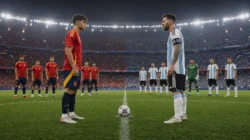
He surpassed Lionel Messi’s record of 21. Mbappé therefore became the leading goalscorer in the history of the men’s World Cup.
The individual achievement appears extraordinary. However, France’s final result exposed problems that personal celebrations should not conceal.
Ten Goals Could Not Save France
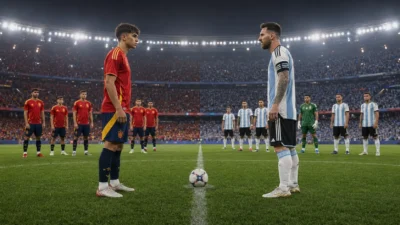
Mbappé finished the tournament two goals ahead of Messi. The Argentina captain scored eight times.
Jude Bellingham and Erling Haaland followed with seven goals each. Mikel Oyarzabal contributed five goals for Spain.
The race revealed an important reality. The 2026 World Cup placed established stars and a new generation inside an exceptionally tight competition.
Mbappé did more than lead a single tournament. He has maintained exceptional productivity since his World Cup debut in 2018.
He scored four goals when France became world champions in Russia. Four years later, he added eight in Qatar.
The 2026 tournament produced another 10. A total of 22 goals makes it impossible to dismiss his record as a coincidence.
“I would have preferred to play in tomorrow’s final.”
Kylian Mbappé — Captain and Forward of the France National Team
The statement highlighted the distance between personal achievement and collective failure. Mbappé won the scoring race, but France missed its main objective.
From Bondy to the Global Stage
Kylian Mbappé Lottin was born in Paris on December 20, 1998. He grew up in Bondy, a suburb of the French capital.
His family maintained a close connection with sport. His father, Wilfried Mbappé, worked in football coaching.
His mother, Fayza Lamari, played handball. That sporting environment shaped Mbappé’s discipline from an early age.
Mbappé began his development at AS Bondy. He later sharpened his abilities at France’s national Clairefontaine academy.
AS Monaco opened the door to professional football. Mbappé broke into the first team while still exceptionally young.
His speed quickly attracted attention across Europe. However, running ability represented only one part of his game.
Mbappé remained composed when facing goalkeepers. He also understood space and anticipated the movement of defensive lines.
During the 2016/2017 season, he helped Monaco win Ligue 1. His performances later produced a major transfer to Paris Saint-Germain.
He developed into a prolific scorer at PSG. He also became the central figure of French football.
Real Madrid signed him in 2024. The move placed Mbappé inside an environment that demands victory almost every week.
That pressure strengthened his maturity. By the age of 27, he had already surpassed several legendary World Cup forwards.
His Output Increased at Every Tournament
Mbappé’s World Cup journey follows a clear pattern. His goal total increased at every edition.
In 2018, Mbappé emerged as a young forward who shocked opponents. He scored in the final against Croatia.
His role changed in 2022 as he became the center of France’s attack. He scored a hat-trick in the final against Argentina.
France still lost in the penalty shootout. However, those three goals proved his ability to perform under the greatest pressure.
The 2026 World Cup raised his output again. He reached double figures even though France failed to reach the final.
Speed Is Not His Only Weapon
Many defenses try to stop Mbappé by closing his running lanes. That approach often fails because opponents focus only on his speed.
Mbappé does not always sprint immediately. He first observes a defender’s hip and foot positions.
When the defender shifts direction, Mbappé attacks the empty space. A fraction of a second gives him a major advantage.
He often begins attacks from the left. From there, he can move inside onto his right foot.
Defenders must choose between two risks. They can close the shooting lane or protect the passing route.
The first choice creates opportunities for teammates. The second gives Mbappé room to shoot.
He can also finish chances in several ways. He can target the far corner or send the ball through a goalkeeper’s legs.
Those qualities distinguish him from forwards who depend only on power. Mbappé combines acceleration, accuracy, and composure.
France’s Dependence Became Obvious
Mbappé’s 10 goals demonstrated exceptional quality. However, the number also exposed France’s dependence on one player.
France had Ousmane Dembélé, Michael Olise, and Bradley Barcola. All three offered speed and creativity.
Problems emerged when opponents blocked transition routes. France often lacked another method of constructing attacks.
In those situations, Mbappé had to drop deep for the ball. That movement took him away from finishing areas.
France consequently lost its greatest threat in front of goal. Opponents gained time to reorganize their defensive lines.
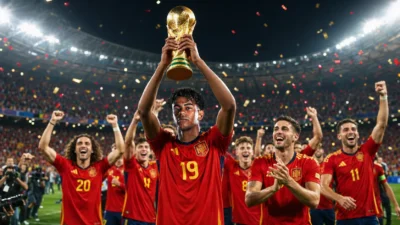
Spain identified this problem during the semifinal on Tuesday, July 14, 2026. They closed the space and controlled midfield.
Rodri and Fabián Ruiz dictated the tempo. They cut the passing routes toward France’s forwards.
Spain won 2–0 and restricted France to two shots on target. Mbappé failed to score.
“We were sloppy. We did not execute the plan properly.”
Kylian Mbappé — Captain of the France National Team
He also criticized France’s ineffective pressure. His assessment showed that the team’s problems extended beyond finishing.
Midfield Lost Control
France possessed forwards with explosive qualities. However, that strength required a consistent supply of passes.
The midfield needed to deliver progressive balls quickly. Any delay allowed opponents to close Mbappé’s space.
The semifinal against Spain exposed that weakness. France struggled to regain control and failed to break the pressure.
Similar problems appeared against England. France lost its balance from the beginning.
England scored four goals in the first half. France trailed 4–0 before attempting a comeback after the break.
The situation exposed a broken connection between the lines. The distance between France’s midfielders and defenders became too wide after losing possession.
Mbappé then scored twice. Bradley Barcola and Dembélé also reduced the deficit.
Their attacking response could not erase the earlier damage. England finished the match with six goals.
Defensive Failures Erased the Attack’s Work
A team normally has a strong chance of winning after scoring four times. France still lost because its defense failed to control the match.
The defenders received insufficient protection. England repeatedly found space during quick attacks.
Bukayo Saka scored a hat-trick. Declan Rice, Ezri Konsa, and Jude Bellingham completed England’s victory.
The 6–4 defeat delivered a serious warning to France. Mbappé’s record could not hide the failure.
The forwards completed their task. However, defensive organization and transitions failed to preserve balance.
France’s next coaching team must reconnect the lines. It must also reduce the side’s dependence on individual brilliance.
The End of Didier Deschamps’ Era
The match against England ended Didier Deschamps’ tenure with France. He led Les Bleus for 14 years.
Deschamps guided France to the 2018 World Cup title. He also took the team to the 2022 final and the 2026 semifinals.
Mbappé paid tribute to the coach who gave him his international opportunity.
“We should have given you a better ending, but we failed.”
Kylian Mbappé — France Captain, in a Message to Didier Deschamps
The message contained an unambiguous admission. France’s current generation failed to close the Deschamps era with a medal.
A new coach will bring a different system. However, the next manager will still face major questions about balance.
Fontaine’s Single-Tournament Record Still Stands
Mbappé became the first player since Gerd Müller in 1970 to score 10 goals in one World Cup.
However, Just Fontaine still holds the record for the most goals in a single edition. The French striker scored 13 times in 1958.
The three-goal gap illustrates the scale of Fontaine’s achievement. Even Mbappé could not reach it.
Mbappé nevertheless leads the cumulative rankings. He reached 22 goals at the age of 27.
The 2030 World Cup remains a realistic possibility for Mbappé. If he stays fit, he could extend the record.
The Golden Boot Carried a Warning
The 2026 World Cup Golden Boot confirmed Mbappé’s position as the most productive forward of his generation.
He scored 10 goals at the tournament. The haul lifted his career World Cup total to 22.
However, football measures more than one forward’s ability. A team still needs defense, midfield control, and stable organization.
France possessed the leading scorer but conceded six goals in its final match. The contradiction exposed problems that demand correction.
Mbappé left North America with an individual record. France returned home with questions about its future.
The Golden Boot may mark the beginning of a new era. Without structural improvement, however, Mbappé’s finishing could once again conceal the same weaknesses.
Mbappé Leads the All-Time World Cup Scoring Record
His two goals against England did more than secure the Golden Boot. They also transformed the World Cup’s historical scoring rankings.
Mbappé now leads with 22 goals. He finished one ahead of Messi, who ended his World Cup career with 21.
Miroslav Klose dropped to third after holding the record for 12 years. The former Germany striker scored 16 goals across four editions.
Ronaldo Nazário follows with 15. Harry Kane and Gerd Müller occupy the next tier with 14 each.
The rankings show a major shift after the 2026 World Cup. Mbappé and Messi both crossed a 20-goal threshold that no player had previously reached.
The most striking change concerns Klose. His 16-goal record had stood since 2014 but now trails Mbappé by six.
Kane also entered the elite group with 14. He drew level with Müller after scoring six goals in 2026.
Fontaine’s efficiency nevertheless remains difficult to challenge. He scored all 13 of his goals in only six matches at the 1958 World Cup.
Mbappé’s achievement creates the possibility of an even higher record. He was only 27 when the 2026 World Cup ended.
If he remains fit and returns in 2030, he could move further ahead of Messi. That prospect will depend on his physical condition and France’s successful regeneration.
Verification sources:
Reuters—Mbappé’s scoring record,
Reuters—France’s semifinal assessment.