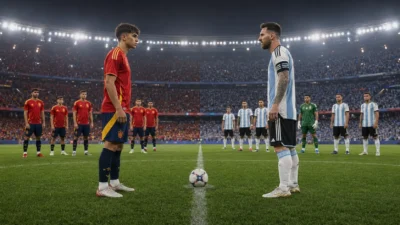


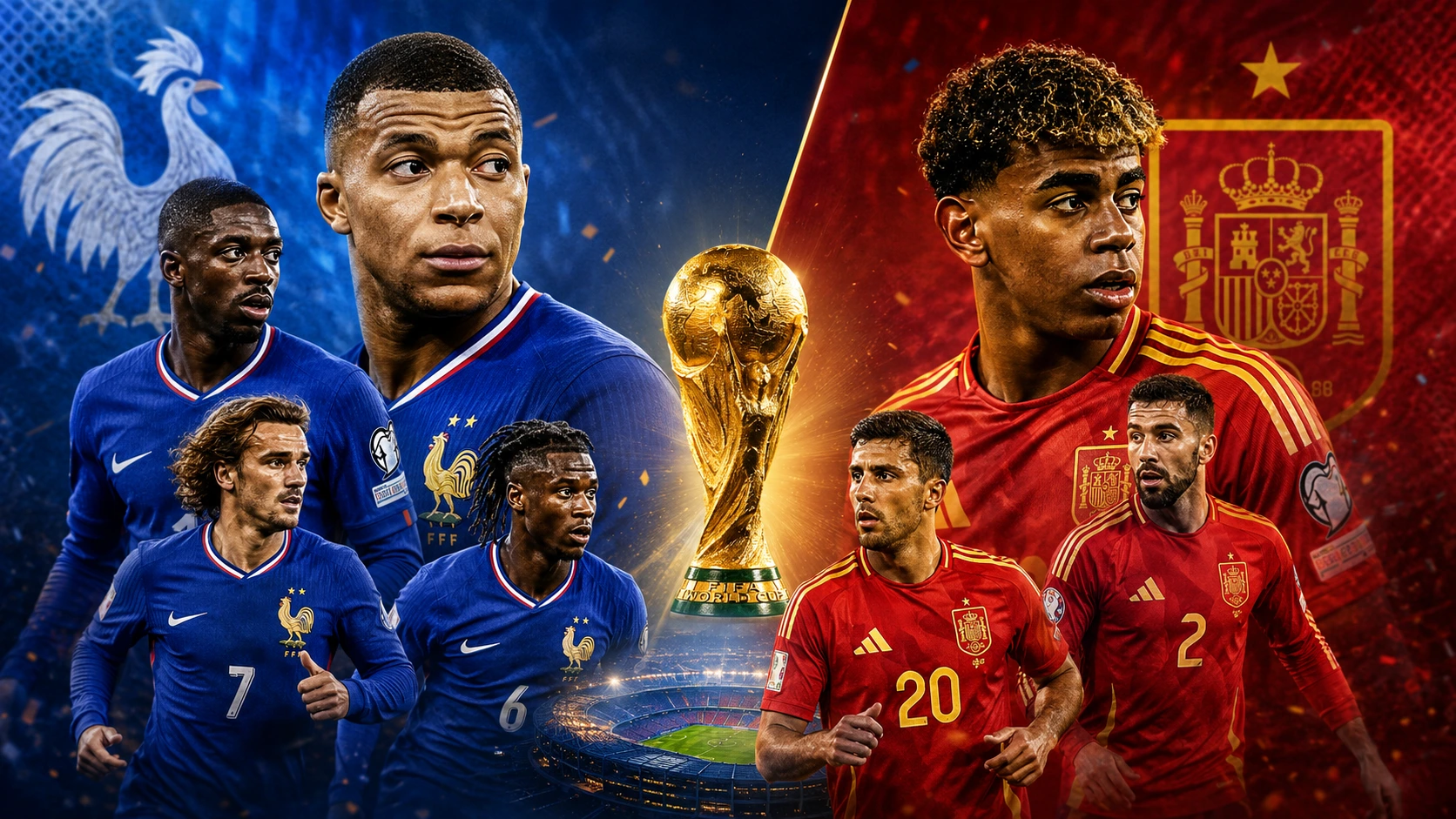
JAKARTA, folitimes.id – France and Spain will put their places in the 2026 FIFA World Cup final on the line in a clash between two contrasting football powers. France bring pace, strength, and ruthless efficiency. Spain arrive with possession, aggressive pressing, and the ability to control the tempo.
- France Bring the Tournament’s Most Lethal Attack
- Spain Rely on Control and Patience
- The Midfield Battle Will Be Crucial
- Recent History Adds More Pressure
- First-Half Match Prediction
- The Second Half Could Become More Open
- Extra Time Remains a Real Possibility
- Star Players Who Could Decide the Match
- Projected Winning Percentages
The two teams will meet at Dallas Stadium in Arlington, Texas, on Tuesday, July 14, 2026, local time. Kickoff is scheduled for 2 p.m. in Dallas, or 2 a.m. WIB on Wednesday, July 15, 2026.
This match will do more than bring together two former world champions. It will also test whether Spain’s control can contain France’s explosive attack.
Les Bleus are pursuing a third consecutive World Cup final. Spain are trying to return to the title match for the first time since lifting the trophy in 2010.
Neither team has fallen behind at any point in the tournament. That record highlights their consistency, but it may also encourage a cautious opening.
France Bring the Tournament’s Most Lethal Attack
France reached the semifinal after defeating Morocco 2-0 on Thursday, July 9, 2026. Didier Deschamps’ team played efficiently without needing to dominate possession.
France have scored 14 goals and conceded only twice during the 2026 World Cup. That record shows a strong balance between attacking sharpness and defensive solidity.
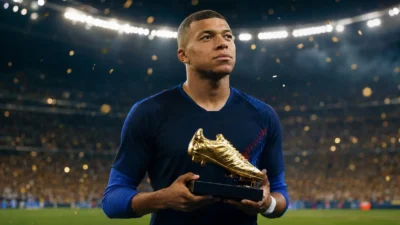
Kylian Mbappé remains the central threat. He can attack from the left, move into central areas, or chase long passes behind the opposition’s defensive line.
Mbappé’s pace could force Spain’s right-back to defend deeper. That situation may reduce La Roja’s attacking influence on that side of the pitch.
However, concerns have emerged over Mbappé’s ankle. He missed part of France’s latest training session after taking a knock against Morocco.
Deschamps still expects the France captain to play. Mbappé also completed part of the training session, although the coaching staff reduced his workload.
France do not rely on Mbappé alone. Ousmane Dembélé, Michael Olise, Désiré Doué, and Bradley Barcola give Deschamps several attacking options.
Dembélé can change the direction of an attack with his off-the-ball movement. Olise can create space through incisive passes and shots from outside the penalty area.
That squad depth keeps France dangerous when matches enter the final 20 minutes.
Spain Rely on Control and Patience
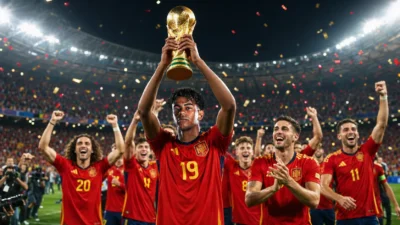
Spain advanced to the semifinal after beating Belgium 2-1 on Friday, July 10, 2026. La Roja preserved their identity through quick circulation and immediate pressure after losing possession.
Spain have conceded only one goal throughout the tournament. That statistic shows how their possession game also functions as a defensive system.
Rodri will hold the most important role in midfield. He must control the rhythm while stopping France’s counterattacks before they develop.
Pedri offers the ability to carry the ball through pressure. Dani Olmo can operate between the opposition’s midfield and defensive lines.
That combination gives Spain several routes into the final third. However, every turnover could leave large spaces for Mbappé and Dembélé.
Lamine Yamal will attract most of the attention on the right wing. The 19-year-old has scored only once in the tournament after arriving with a hamstring problem.
Spain coach Luis de la Fuente continues to place great trust in him. He believes Yamal’s best World Cup performance could still come in the semifinal.
Yamal does not need to score to change the match. His movement can attract two defenders and open space for midfielders arriving from deeper positions.
Mikel Merino may also play an important role. He offers a threat through aerial duels, long-range shooting, and late runs into the penalty area.
The Midfield Battle Will Be Crucial
The match will probably be decided in midfield. Spain want to dominate possession, while France do not intend to spend the entire game waiting in their defensive half.
Deschamps has said his team will try to challenge Spain’s control. Aurélien Tchouaméni’s return gives France more power to win the ball and close passing lanes.
Tchouaméni could engage Rodri directly. Adrien Rabiot or Manu Koné may help pressure Pedri and Olmo.
If France break Spain’s first line of pressure, Mbappé will have large spaces to attack. Spain, however, could pin France back if Rodri receives enough time to organise possession.
That battle makes the first pass after every turnover extremely important.
France will try to move the ball forward as quickly as possible. Spain will attempt to regain possession before their opponent crosses the halfway line.
Recent History Adds More Pressure
France and Spain have met only once at a World Cup before this semifinal. France won their 2006 round-of-16 encounter 3-1.
Spain, however, dominated the last two competitive meetings. La Roja defeated France 2-1 in the Euro 2024 semifinal.
Spain won again, 5-4, in the UEFA Nations League semifinal on June 5, 2025. That result showed that France still faced problems against Spain’s pressing and quick passing combinations.
Nevertheless, France possess greater attacking firepower in this tournament. Mbappé has also looked sharper than he did when the teams met at Euro 2024.
History gives Spain confidence. The outcome, however, will depend on small details rather than past results.
First-Half Match Prediction
Spain will probably take control of possession from the opening minutes. La Roja could record between 55 and 60 percent possession during the first half.
France are expected to maintain compact distances between their lines and avoid pressing too high. They may guide Spain toward the flanks before trying to win the ball.
The opening 15 minutes could remain tight. Both teams will avoid mistakes that could create counterattacking opportunities.
Spain may produce more attempts. France, however, could generate chances of higher quality.
Mbappé will target the space behind Spain’s right-back. Yamal will test the discipline of France’s left-sided defender in one-on-one situations.
Projected first-half scoring probability:
| Team | Chance of scoring |
|---|---|
| Spain | 54 percent |
| France | 46 percent |
A 0-0 scoreline remains the most likely result at halftime. A 1-1 score is also possible if both teams fail to control transitions.
The Second Half Could Become More Open
The tempo will probably increase after the interval. Any team still searching for a goal will need to take greater risks.
France hold an advantage through the depth of their substitutes. Deschamps could introduce Doué or Barcola to attack defenders who begin to tire.
Spain could use Merino to add physical presence inside the penalty area. He could also shift their approach from short passing toward more crosses.
The spaces between the lines may grow after the 60th minute. That situation would favour France because of their players’ pace.
Spain would remain dangerous if they continue to retain possession. Long passing sequences could drain the energy of France’s midfielders and defenders.
Projected second-half scoring probability:
| Team | Chance of scoring |
|---|---|
| France | 57 percent |
| Spain | 43 percent |
The period between the 60th and 80th minutes could decide the winner. One misplaced pass or one delayed defensive reaction could lead directly to a goal.
Extra Time Remains a Real Possibility
The balance between the two squads creates a significant chance that the match will go beyond 90 minutes. Both teams possess strong defensive structures and rarely lose control.
France, however, have more substitutes capable of changing the game. That factor gives them a slight advantage if the match enters extra time.
Spain will try to lower the tempo as fatigue increases. They may use possession to avoid an open, end-to-end contest.
France could instead increase the use of direct attacks. They can threaten with long passes and the speed of their wide players.
Projected match duration:
| Scenario | Probability |
|---|---|
| Decided within 90 minutes | 63 percent |
| Reaches extra time | 27 percent |
| Reaches a penalty shootout | 10 percent |
If the match reaches penalties, psychological pressure may matter more than tactical dominance.
Star Players Who Could Decide the Match
Kylian Mbappé stands as the strongest candidate to determine the outcome. He possesses pace, composure, and the ability to find space in crowded areas.
Lamine Yamal represents Spain’s greatest attacking threat. One successful one-on-one duel could change the direction of the game.
Rodri may become the most important player tactically. Spain’s ability to control the match depends heavily on how well he escapes pressure.
Michael Olise could become France’s difference-maker. He offers high-quality final passes and can move into spaces created when defenders focus on Mbappé.
Mikel Merino also deserves close attention. He has already shown his ability to make an impact from the bench.
Projected Winning Percentages
Folitimes.id gives France a narrow advantage because of their attacking sharpness and greater squad depth. The difference between the two teams, however, remains very small.
| Match outcome | Projection |
|---|---|
| France qualify for the final | 54 percent |
| Spain qualify for the final | 46 percent |
France will gain a greater advantage if the match becomes open. Spain will improve their chances if they control the tempo and limit turnovers.
The primary score prediction points to a 2-1 France victory. A secondary scenario sees the match ending 1-1 after 90 minutes before France win in extra time.
This semifinal does not promise complete domination from either side. One turnover, one failure to close space, or one individual decision could transform the game.
Spain bring the more structured system. France bring the more dangerous individual weapons.
The team that succeeds in imposing its football identity will advance to the 2026 World Cup final.