

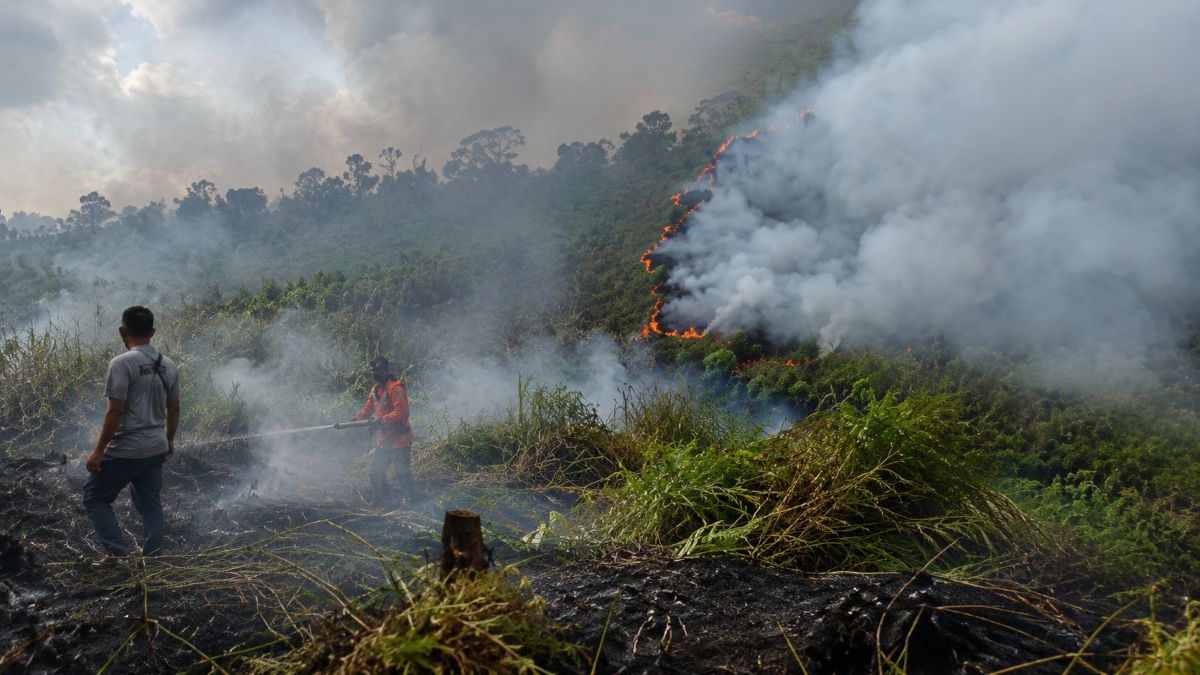
PALANGKA RAYA, folitimes.id – Forest and land fires have returned to Palangka Raya, Central Kalimantan, with emergency crews continuing suppression work on peatland in the Bukit Tunggal area. The fire affected approximately half a hectare near Danau Rangas Road.
Although visible flames were brought under control, smoke continued to emerge from below the peat surface. Crews therefore maintained cooling operations to prevent underground embers from spreading or reigniting dry vegetation.
Five Hours of Suppression Work
The joint operation ran from around noon until 5 p.m. Firefighters concentrated on areas where heat remained trapped below the ground. Peat fires can continue burning beneath the surface even after flames are no longer visible.
Palangka Raya disaster management officials said the priority was to prevent the fire from expanding into nearby areas with dry vegetation. Personnel repeatedly soaked the affected ground and monitored smoke points.
Peat Creates a Difficult Fire Environment
Peat contains large amounts of organic material. During dry conditions it can burn slowly underground, making the source of heat difficult to locate and extinguish. Wind and low humidity can then help the fire return to the surface.
This characteristic makes peatland fires more difficult than ordinary vegetation fires. Crews often need large quantities of water and extended monitoring after the initial flames are controlled.
BNPB Helicopter Supports the Response
A helicopter from Indonesia’s National Disaster Management Agency, BNPB, supported ground personnel during the operation. Aerial assistance can help deliver water to locations that are difficult to reach and reduce the risk of the fire moving beyond the immediate site.
The response involved local disaster management teams and other emergency personnel. Coordination between air and ground units is particularly important when visibility is reduced by smoke.
Smoke Shows the Fire Is Not Over
Officials warned that the operation could not be considered complete while smoke continued to rise from the ground. Cooling and monitoring were expected to continue until crews were confident that underground hotspots had been eliminated.
Residents were urged to avoid activities that could ignite dry land and to report smoke or fire quickly. Early detection can prevent a small hotspot from developing into a much larger emergency.
Dry Season Raises the Risk
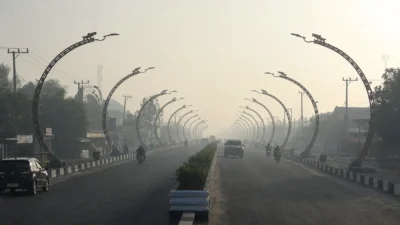
Central Kalimantan faces recurring fire risks during the dry season. Peatland fires can damage ecosystems, threaten public health and disrupt transport when smoke spreads across populated areas.
The Palangka Raya incident was limited in size, but it illustrates why prevention and rapid response remain essential. Persistent underground heat can turn a controlled fire into a renewed threat if weather conditions deteriorate.