
OPINION, folitimes.id – In the middle of rapid development across Central Kalimantan, old wooden buildings are often treated merely as historical objects or cultural tourism sites. Yet their walls can preserve stories about the arrival of education, social change and the formation of community identities that remain visible today.
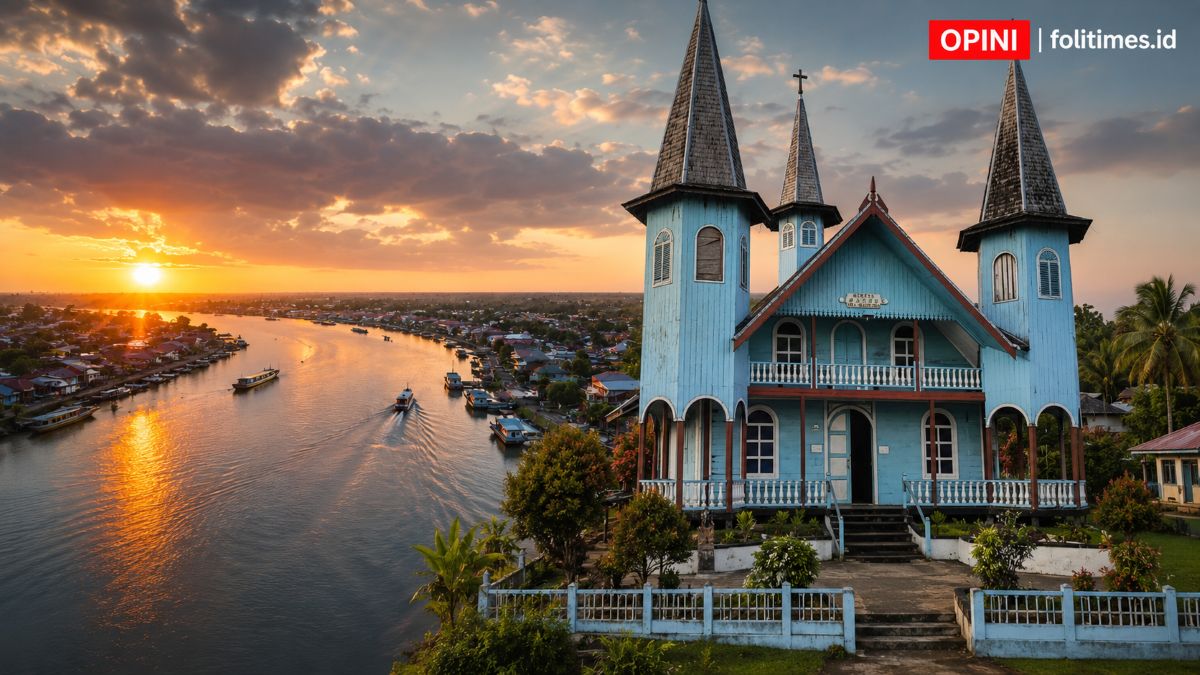
GKE Imanuel Church in Mandomai, West Kapuas District, is one of the clearest examples. Established in 1876, the church is older than the province of Central Kalimantan itself. Its history extends beyond religion and reveals how a settlement on the Kapuas River became connected to wider networks of education and cultural exchange.
A History Older Than the Province
Mandomai developed long before modern roads connected the interior of Kalimantan. Rivers functioned as the main routes for trade, communication and travel. Communities along the Kapuas were therefore not isolated; they were part of a living network that linked villages, markets and administrative centres.
The church emerged during this period of change. Its presence became associated with new forms of schooling and literacy, while local Dayak traditions continued to shape everyday life.
When the Kapuas River Was the Main Road
For generations, the Kapuas River served as Mandomai’s connection to the outside world. People, goods and ideas moved along the water. The river influenced settlement patterns, economic activity and the location of important public buildings.
This environment helps explain why the history of Mandomai cannot be separated from the river. The church and the community grew within a landscape where waterways were social and cultural corridors.
A Place of Worship That Also Supported Education
Historical religious institutions in the region often played multiple roles. In addition to worship, they helped introduce reading, writing and organised education. For local communities, access to literacy could open new paths to public administration, teaching and engagement with institutions beyond the village.
GKE Imanuel therefore represents more than the spread of a religion. It forms part of a broader story about how education contributed to social transformation in Central Kalimantan.
European Influence Met Dayak Traditions
The arrival of missionaries introduced architectural forms, educational methods and religious practices from Europe. These influences did not simply replace local culture. They interacted with Dayak traditions, languages and social relationships.
The resulting history is complex. It includes cultural negotiation, adaptation and the ability of local communities to absorb outside influences while maintaining their own identity.
Church Bells and Mosque Drums Grew Together
Mandomai is also remembered as a place where Christian and Muslim communities developed side by side. The sound of church bells and the traditional drum used to call Muslims to prayer became part of the same social landscape.
This coexistence is an important part of the settlement’s heritage. It demonstrates that the history of Central Kalimantan was shaped not only by institutions, but also by everyday relationships between neighbours of different faiths.
A Collective Memory That Must Be Protected
Preserving GKE Imanuel should not stop at maintaining the physical building. The stories connected to education, the river, Dayak society and interfaith relations also need to be documented and passed to younger generations.
Archives, oral histories, photographs and community research can help explain why the site matters. Without that context, an old building may survive while much of its meaning disappears.
Preservation Beyond Tourism
Mandomai has the potential to become an important destination for historical and educational tourism. Such development should place local communities at the centre and protect the dignity of religious sites.
The value of Mandomai lies in the way a river settlement, an old church, schools and diverse communities helped shape the social history of Central Kalimantan. Protecting that memory means protecting a chapter of Indonesian history that began long before the province appeared on a modern map.