
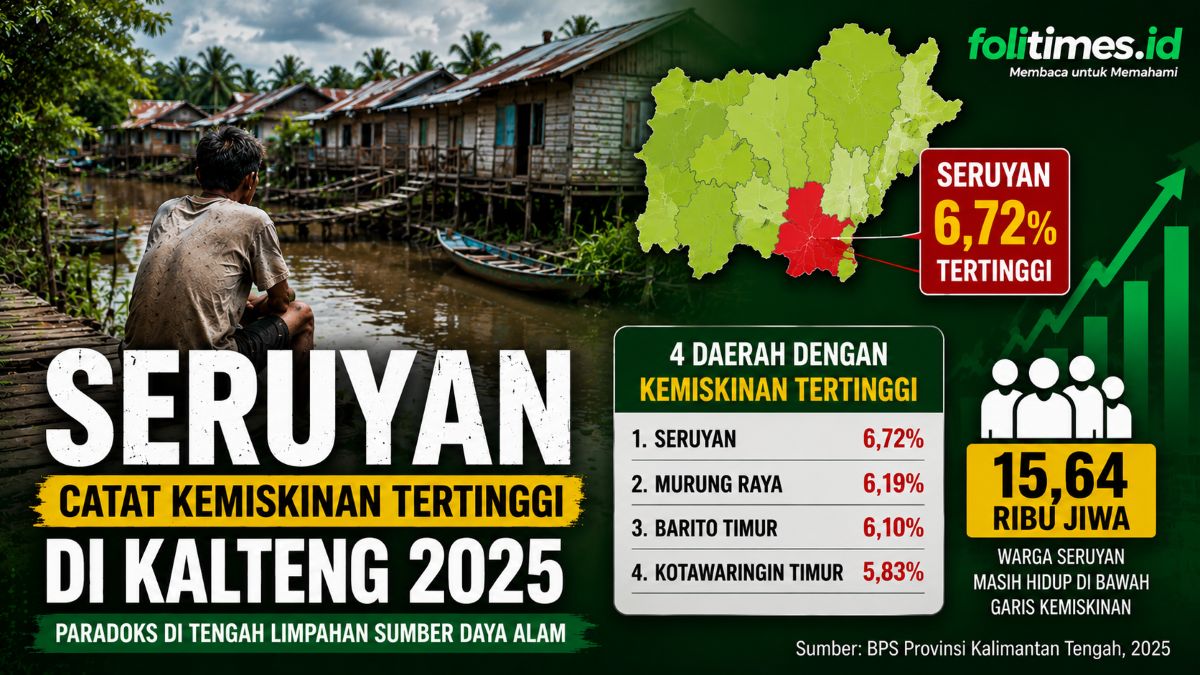
PALANGKA RAYA, folitimes.id – Poverty data from Central Kalimantan reveals a persistent development paradox in a province rich in plantations, forests and other natural resources. Seruyan recorded the province’s highest poverty rate in 2025, according to figures cited from Statistics Indonesia’s Central Kalimantan office.
The poverty rate in Seruyan reached 6.72 percent, representing approximately 15,640 people. The figure placed the district above other regencies and cities in the province and raised questions about how the benefits of natural-resource-based economic activity are distributed.
Several Districts Remain Poverty Hotspots
Seruyan was not the only area facing significant challenges. The provincial data indicates that poverty remains concentrated in several districts where communities can be geographically dispersed and access to public services is uneven.
Percentage rates and the absolute number of people living below the poverty line must be read together. A district with a lower percentage may still contain a large number of vulnerable households, while a smaller district can record a higher rate with fewer people.
Natural Wealth Has Not Guaranteed Welfare
Central Kalimantan is known for palm oil, forestry, mining and extensive land resources. These sectors generate investment and economic activity, but their presence does not automatically improve household welfare.
The quality of employment is crucial. Temporary, informal or low-paid work may not provide families with stable income, social protection or opportunities for advancement. Communities located close to resource extraction can also face environmental costs without receiving a proportional share of economic benefits.
Data Coordination Is a Critical Issue
Effective poverty reduction depends on accurate and consistent data. Differences between statistical measurements, social-assistance databases and local administrative records can result in eligible households being missed or assistance reaching people whose circumstances have changed.
Central and regional authorities need systems that can identify vulnerable families, update household conditions and connect data with practical programmes in health, education, housing and employment.
Development Must Be Measured Beyond Investment
Large investment values and regional economic growth do not provide a complete picture of welfare. Governments also need to examine household income, school attendance, access to health services, food security, sanitation and the cost of reaching public facilities.
In rural areas, distance can become a major barrier. A community may technically have access to a school or health centre while travel costs and poor transport make the service difficult to use.
The Challenge Is Distribution and Opportunity
Reducing poverty in Central Kalimantan requires more than attracting new projects. Development policy must create stable local employment, strengthen small businesses and improve public services in villages that are far from urban centres.
Revenue generated from natural resources should support education, health care, infrastructure and economic diversification. Transparent planning can help residents understand how regional income is being converted into public benefits.
Seruyan’s figures are a warning that natural wealth and economic activity do not guarantee equitable development. The province’s success should ultimately be measured by whether families gain reliable income, better services and a realistic path out of poverty.